Build the future you want to live in.
I know these times aren't the easiest for all of us, but I am an optimist - I see the glass as refillable instead of half-full or half-empty. To brighten up your days, I publish the Regenerate Your World newsletter coming to your inbox on a bi-weekly basis. |
|
|
|
You can't self-care your way out of depleted soil |
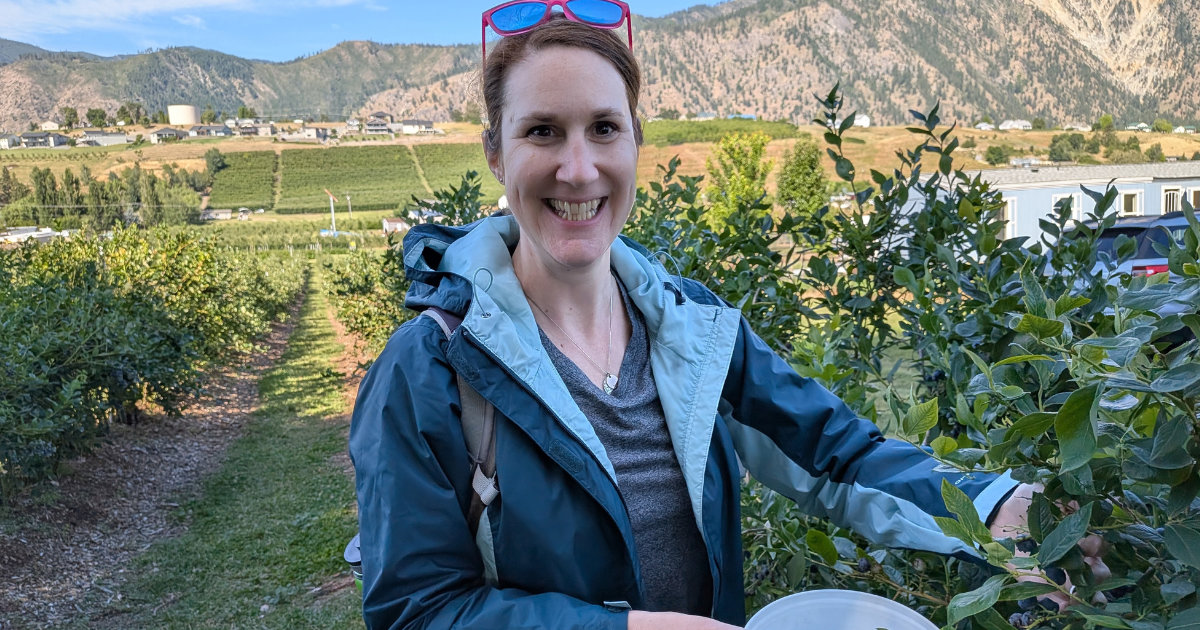
Here's a snapshot from my latest adventure in Washington State! The fertile soil here creates the perfect conditions for blueberries to grow. |
Dear Empower Reader,
In the early 1990s, a doctoral student at Harvard named Amy Edmondson had a question: do better teams make fewer mistakes?
She was part of a larger study of medication errors in hospital units. Her piece was to measure the quality of teamwork in eight nursing units, then compare it to how many errors each unit reported. She expected the strongest teams to have the fewest errors.
The data said the opposite. The units with the best leadership and the best relationships reported more errors, not fewer. Edmondson has described the moment as devastating.
Then she asked a better question. What if the better teams weren't making more mistakes? What if they were simply more able to say so? In the units where people trusted that speaking up would be met with support, errors came into the light, where they could be learned from. In the quieter units, nurses were just as human. The mistakes were still happening. No one felt safe saying it out loud. The system wasn't producing more errors. It was producing more truth.
In my last issue, I walked through five years of Empower Possible in four seasons. This issue asks the question underneath that celebration: what made it sustainable?
When I look back, it's tempting to credit grit. But the truth is that the business has had to survive seasons of personal change, moving to a new city, leaving behind the strong network that helped build the business and seasons of professional change, starting new full time jobs, and grit alone wouldn't have carried it through any of them.
I launched Empower Possible as a business built around online courses. When an early partner stepped away in the spring of 2022, I carried on solo. Over five years, that work has grown into 118 newsletters, 17 podcasts, 11 online courses, and 40 events. And somewhere along the way, the center of gravity shifted. Today, my work centers on in-person workshops and retreats, and this February I'll host a retreat of my own. I was pulled towards in-person work because my full-time role is all online, as I work remotely. I found creating content online was less satisfying and was drawn to in-person projects.
For a long time, I could have told that story as a pivot, or even as a failure of the original plan. I don't see it that way anymore. The courses were never wasted effort. They were the first crop, and they built the soil: the skills, the audience, and the clarity that made the next season possible. Empower Possible was born, in part, from my own experience of professional challenge and burnout.
At first, I held that experience as a personal problem to solve: What's wrong with me? Why did I stay so long in an organization where I wasn’t thriving? Building a business taught me to ask a better question, the same one Edmondson's nurses taught the field: What is happening around me that makes this hard to sustain? Any gardener knows you don't blame the tomato plant for wilting in depleted soil. You test the soil. |
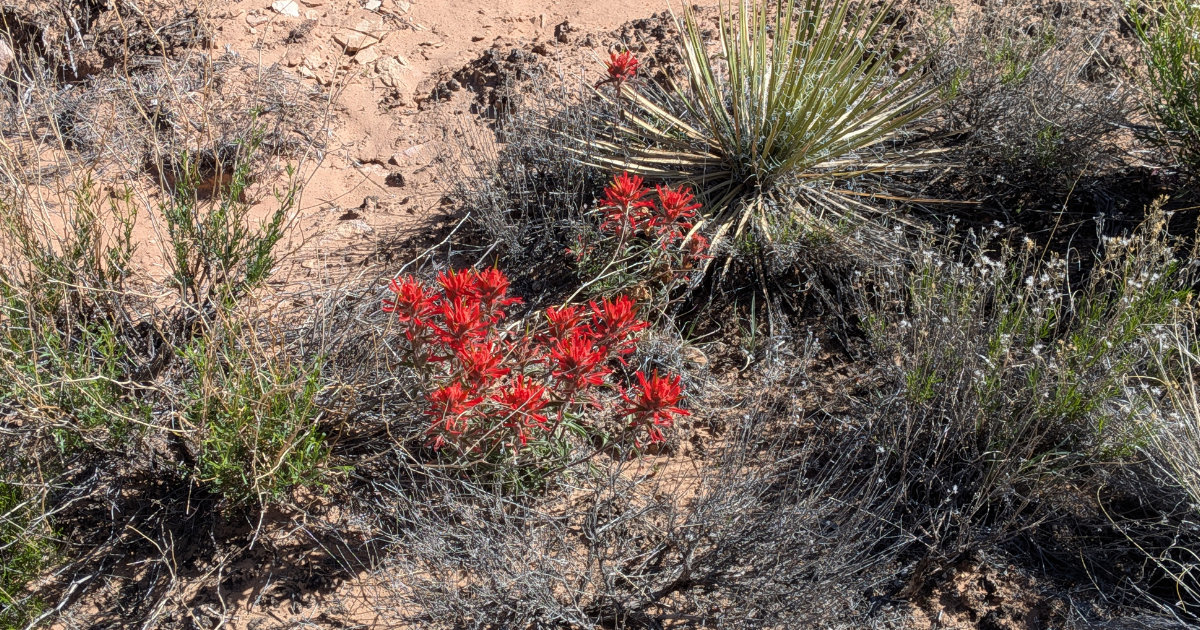
In a past newsletter, I shared insights about the desert bloom. Just like the soil varies, so do the conditions that help desert plants flourish. These resilient plants have adapted beautifully to their environment. Similarly, each of us has unique needs, and it's essential to discover the right setting for our own growth. |
The rest of the newsletter focused on burnout in the workplace however, all of the examples hold true for a family or friend dynamic. These are living systems we are part of just like our workplaces are living systems.
Burnout is a workplace condition, not a personal flaw. The World Health Organization's definition of burnout describes it as the result of chronic workplace stress that hasn't been successfully managed. The framing is about the workplace, not the worker. The biggest drivers are about how work is run. In a study of nearly 7,500 full-time employees, Gallup found five factors most strongly tied to burnout: unfair treatment, an unmanageable workload, unclear roles, a lack of communication and support from a manager, and unreasonable time pressure. Notice what's missing from that list: working hard. The researchers noted that burnout has less to do with high expectations and more to do with how people are managed. Safety is a team's foundation. Edmondson's later research defined psychological safety as a shared belief within a team that it's safe to take interpersonal risks: to ask a question, admit an error, or offer an unfinished idea. Google's Project Aristotle, a study of what makes teams effective, found psychological safety to be the most important of five dynamics shared by its highest-performing teams. Renewal can be designed. In 2022, the U.S. Surgeon General released a framework for workplace mental health and well-being built around five essentials: protection from harm, connection and community, work-life harmony, mattering at work, and opportunity for growth. It treats well-being as something organizations build into their policies and practices, not something people are expected to supply on their own. Restoration is physical, too. In three field experiments in offices in the UK and the Netherlands, researchers found that adding plants to sparse, "lean" workspaces improved satisfaction and concentration, and raised productivity by about 15%. Researchers who study recovery also find that mentally stepping away from work during off-hours is one of the key ways people replenish. None of this research was written about solo founders. But the conditions it describes are the ones I've had to build for myself, because when you're the whole system, no one else is going to.
Some lessons I have learned that can be hard for organizations to acknowledge.
We ask people to absorb what the system should fix. Resilience workshops and self-care reminders are well-intended, but no amount of breathing can offset an unmanageable workload or a role no one has defined. For years, I tried to out-hustle design problems in my own business. It never worked. Psychological safety isn't the same as being nice. It means the hard conversations can actually happen. The best teams in Edmondson's study held high standards and felt safe naming what went wrong. That includes the conversation you have with yourself about what's no longer working. Leaders are part of the soil. Every leader teaches the team what the system rewards. If the person who answers email at 10 p.m. gets the praise, the system is telling everyone what renewal costs. When you lead a business of one, you're teaching yourself the same lesson. Renewal means leaving something fallow, and letting things evolve. Farmers rotate crops and rest fields because land harvested constantly stops yielding. Letting the online courses become one chapter rather than the whole book wasn't giving up. It was crop rotation. A system that can't change what it grows isn't sustainable. It's just stubborn. Tending the soil: for managers, team members, and business owners Three levers shape whether a system renews or depletes people. Here's how they showed up in my own five years. 1. Conditions: what the work asks of people. Workload, role clarity, fairness, and time pressure. Managers: Make roles and priorities explicit, and when something new arrives, say what's coming off the plate. Team members: Name the trade-off out loud ("If I take this on, X will wait. Is that the right call?") rather than silently absorbing it. In my story: Two of the lessons I named last issue live here: get contracts clear and plan for the worst, and put real work into the foundation. Clarity isn't glamorous, but it's what keeps a system from quietly draining the people inside it.
2. Conversation: whether people can speak truthfully. Safety, voice, and a say in decisions. Managers: Respond to bad news with curiosity first. How you react the first time someone admits a mistake shapes whether anyone does it again. Team members: Be the first to share an imperfect idea or a lesson learned from an error. Safety is built by people going first. In my story: Believing people when they show you who they are is a form of truth-telling, and so is having a mentor you can be honest with about what isn't working.
3. Rhythm: how work and rest move together. Recovery, pauses, growth, and the physical environment. Managers: Model real time away, and protect it for others. Team members: Create small boundaries that mark the end of the workday, and bring a bit of the living world into your workspace. In my story: A newsletter every other week for five years isn't a sprint. It's a rhythm. And "learn what you need to learn when you need it" is the growth lesson: I didn't have to master everything before starting, only the next thing. Much like building the EMPOWER model, ( Engage, Meaning, People, Organization, Well-being, Empathy, Regenerate). It started with a seed, an idea about holistic change and transformation through taking steps in through what each of the letters stand for, Engage, Meaning, People, Organization, Well-being, Empathy, and Regenerate. The seed was planted but what helped it grow was research, conversations, and experience. With each meaningful conversation and challenge the framework formed into what it is today. Not all of us have a project or business they have been working on for the past five years, however all of us are building relationships and/or working on personal or professional growth. This same framework applies: we are all working together, we are a living system.
|
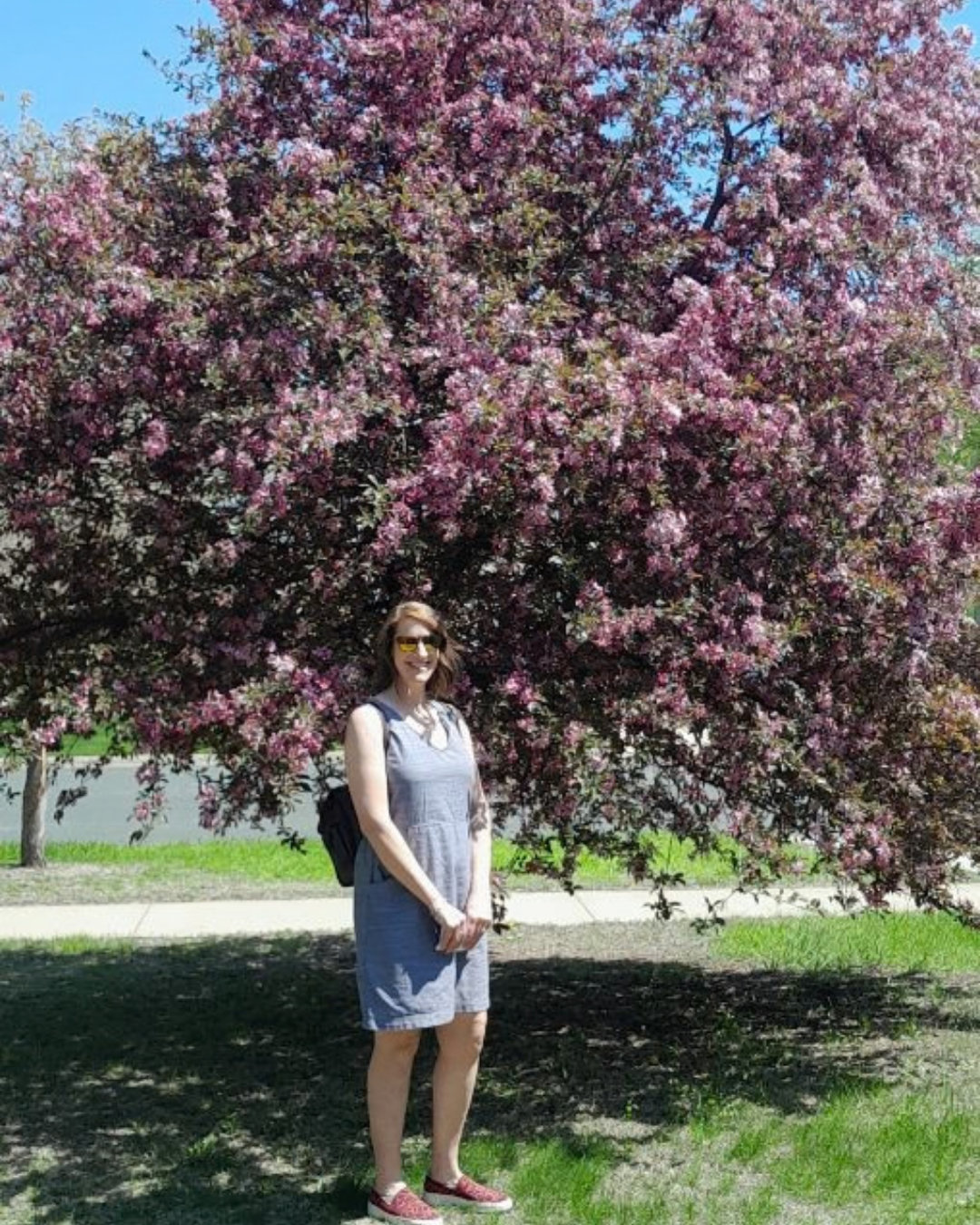
This tree in my front yard serves as a daily inspiration for me, visible from my office window. It showcases the cycle of life, blooming in spring, soaking up the sun's warmth in summer, shedding its leaves in the fall, and standing strong and bare during winter. Each season brings its own beauty, reminding us of the power of transformation and renewal. |
Affirmation I am not the problem to be fixed. I am a living thing in a living system, and systems can be tended and allowed to change. Your practice: the ten-minute soil check Rate each of these from 1 (depleted) to 5 (rich) for your own work right now: workload, role clarity, fairness, manager or team support, and time pressure. Circle the lowest score. Choose one conversation (not a fix) that could shift it. Who needs to hear this, and what's one honest sentence you could say? Then ask one more question: Is there something in my work that has run its season and could be allowed to evolve?
Managers: try the same check with your team, anonymously, and share back what you heard and one thing you'll change. Reflection questions Where in my work or life have I been trying to fix the plant when the soil needs attention? What have I built (or been given) that has quietly kept me going, and what would happen if it disappeared? What has run its season in my life or work, and what might grow if I let it evolve? What does my own behavior teach others about what renewal costs?
Take care, Dear reader,
Julie
|
Plant The Seeds Poet: Catherine Pulsifer |
|
|
|
Where can you find EMPOWER Possible?
In addition to posting on my own social media, I collaborate with other entrepreneurs.
Thank you to The CEO Mindset for hosting me on your podcast.
By pressing play on this episode, you'll discover:
How to change your life with systems, goals, and design a personal blueprint.
Are you ready to change your life? I am not sure if I know anyone who isn’t in some form or fashion. In this episode of the podcast, we talk about the relationship between systems, goals, and my personal blueprint.Click here to listen.
Interested in catching up on our previous podcast episodes? I invite you to explore our library of past recordings, where we delve into a diverse range of topics related to happiness and well-being.
https://empowerpossible.com/podcasts/  |
Wisconsin Employee Wellness Conference December 8-9, 2026 Madison Wisconsin I’m excited to share that I’ll be speaking at the Wisconsin Employee Wellness Conference, presented by Wellness Alliance, on December 8–9, 2026 in Madison, WI! Now in its 35th year (formerly the WCWI Employee Well-Being Conference), this is the largest employee well-being conference in the Midwest, bringing together HR, benefits, wellness, and culture leaders from across the region. If you’re working in HR, wellness, talent development, or organizational culture, I’d love to see you there. Let’s connect and talk about building healthier, more resilient workplaces together.
Wisdom of Winter Retreat
February 25-28, 2027
Nisswa, Minnesota Join us for a restorative winter women’s retreat designed to help you slow down, reconnect with yourself, and create space for deep renewal before stepping into the next season of your life. Click here to go to our co-host’s website and learn more. Can’t Make it to the retreat? Sign up for the waitlist for our next offering, please click HERE to complete the formMountain 10 Workshop
April and May, 2027
Faribault’s Future Program To identify emerging leaders, to develop and broaden their knowledge of the community, and to motivate and inspire them to become leaders within Faribault. People interested in developing a stronger sense of leadership within the community, or their careers are encouraged to apply. The program is valuable for employees and employers looking to acquire new leadership skills and perspectives. Class members also closely examine elements of the community through tours, speakers and panel discussions each month. For more information on the Faribault’s Future course, contact Kymn Anderson or call 507-334-4381
|
|
|
|
Connect with me on social media! |
Copyright © EMPOWER Possible |
Northfield, United States
EMPOWER Possible is dedicated to empowering individuals, organizations, and communities to organize and act together to regenerate our world through Self, Social, and Systems transformation.
info@empowerpossible.com \ Website \ Mission
You are receiving this email because you expressed an interest in my work—thank you! You can change your email preferences or unsubscribe at any time.
Disclaimer:
This newsletter contains content that has been modified and inspired by ChatGPT, an AI language model developed by OpenAI. While we use ChatGPT to enhance our content, it should not be considered professional advice. For specific concerns or decisions, please consult with a qualified professional or trusted source. The newsletter authors are not responsible for any actions taken based on the information provided by or inspired by ChatGPT. |
|
|
|
|
|
|
|