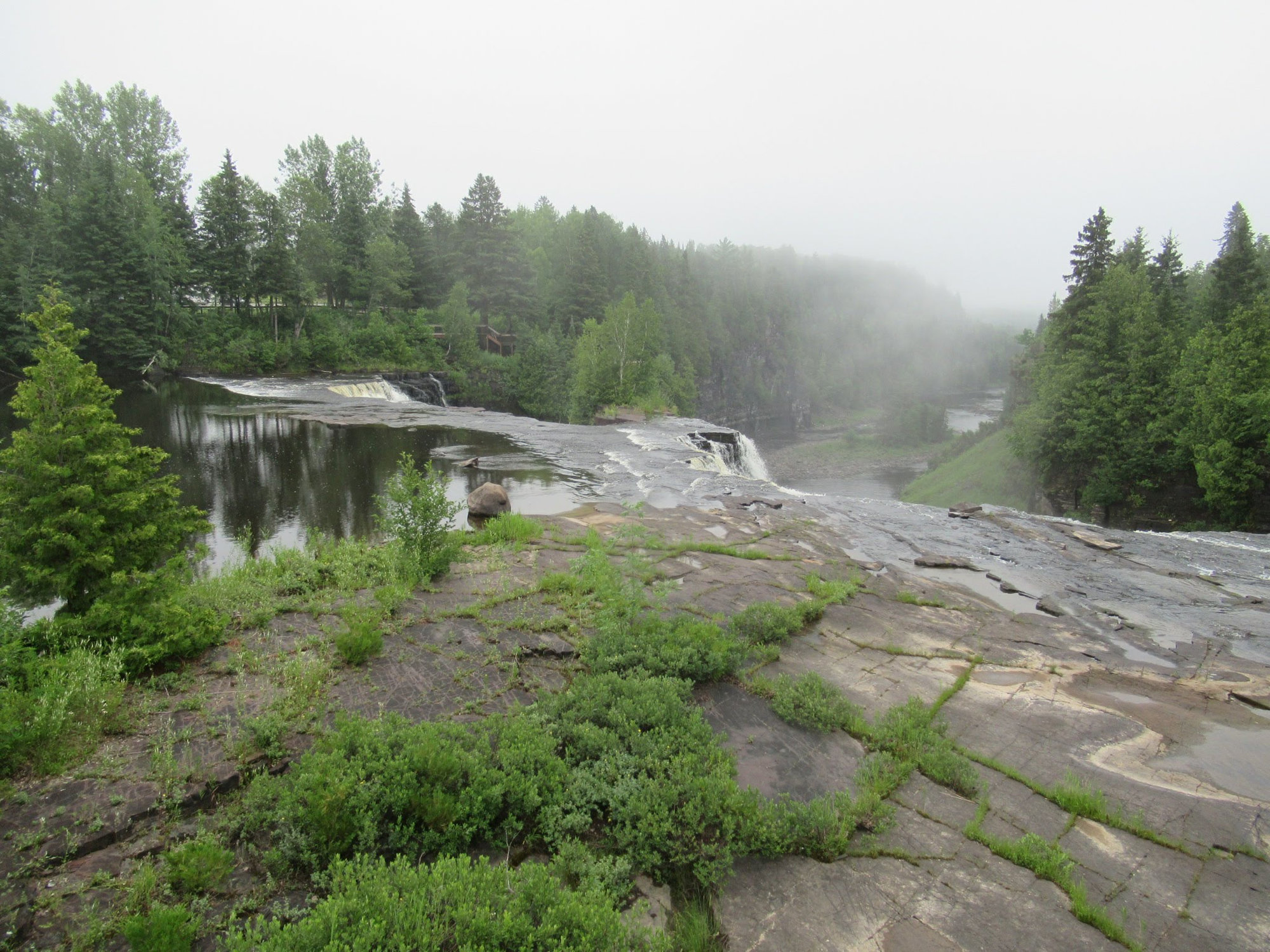
I'm writing this at the end of August, which always feels like the edge of something bigger. Right now my husband, Chuck, and I are up in Michigan's Upper Peninsula, near Marquette, Lake Superior on one side, the woods on the other. Late summer does something specific up there. It's still warm, but it's already leaning; there is a chill in the air. The light hits the water differently than it did in June. Nothing has technically ended. And yet you can feel the hinge. That's the trouble with seasons, the actual ones and the inner ones. They rarely announce themselves. They just start leaning, and you either notice the tilt or you get caught flat-footed by the frost. Psychologist Daniel Levinson spent years studying exactly this kind of tilt in adult life. His research, built from in-depth interviews and later expanded to include women as well as men, found that adulthood isn't the flat, static stretch we assume it is once childhood ends. It moves through distinct seasons, each with its own structure, and each punctuated by transition periods where a person questions the life they've built and starts reorganizing it. Levinson called the relatively stable periods times for building a life around key choices, and the transitional periods the space where those choices get reexamined. Neither one lines up neatly with a birthday.
Here's what the research adds that Levinson couldn't have measured in the 1970s: your felt age and your actual age are often two different numbers entirely, and the gap matters. Across a wide body of research, most adults report feeling meaningfully younger or older than their chronological age, and that gap shows up in measurable ways, in stress levels, in life satisfaction, in how much control people feel they have over their health and their choices. Feeling out of step with your own age isn't a character flaw. It's data. I think that's the piece we skip.
We ask "am I too old for this" or "am I too young for that," as if the calendar were the authority. But the more honest question is: what terrain am I actually standing on right now? Am I in a stable season, building something and wanting to protect it? Or am I in a transition, quietly outgrowing a structure I haven't admitted I've outgrown yet?
Those are different seasons. They call for different things. A stable season wants commitment and depth. A transition wants space and honesty. Treating a transition like it should behave like a stable season, gritting your teeth, waiting for the restlessness to pass, is like trying to force August to stay June. It won't, and pretending it will just delays the harvest.
This is the exact terrain the Mountain 10 experience is built for: the four stages of change: awareness, letting go, vision, and realization. Most people I work with, whether it's a leadership team navigating a merger or someone quietly renegotiating their own career the way I once did, get stuck in the same place: they're already in a transition season, but they're still trying to operate by the rules of the stable one they just left. Naming the season you're actually in is often the whole unlock. Not fixing it. Just naming it accurately.
That's also exactly why the Wisdom of Winter Retreat exists, February 25–28, 2027, at True North Resort in Nisswa, Minnesota, with Rachel Gilbertson of Art of Presence and Taylor Tix and Cris Bickman Otte of Taylor & Co. You can't always do this kind of season-naming inside a Tuesday. It takes three lakeside nights, some distance from your usual roles, and people around you who are asking the same quiet question instead of performing certainty. Spots are limited; if you've been circling the idea, this is your nudge to stop circling and check it out.
|