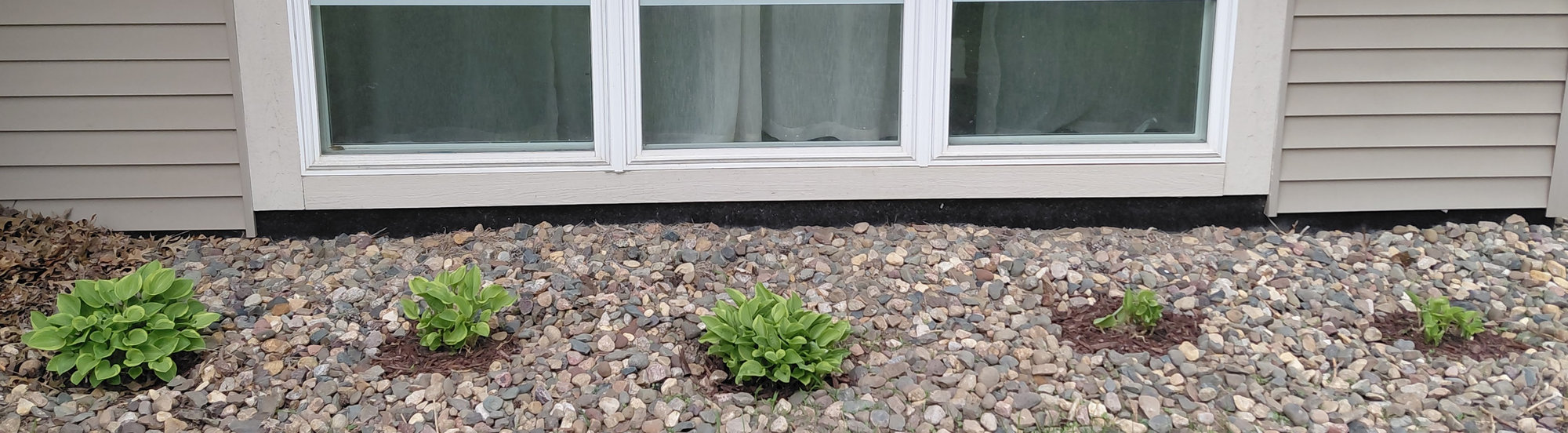
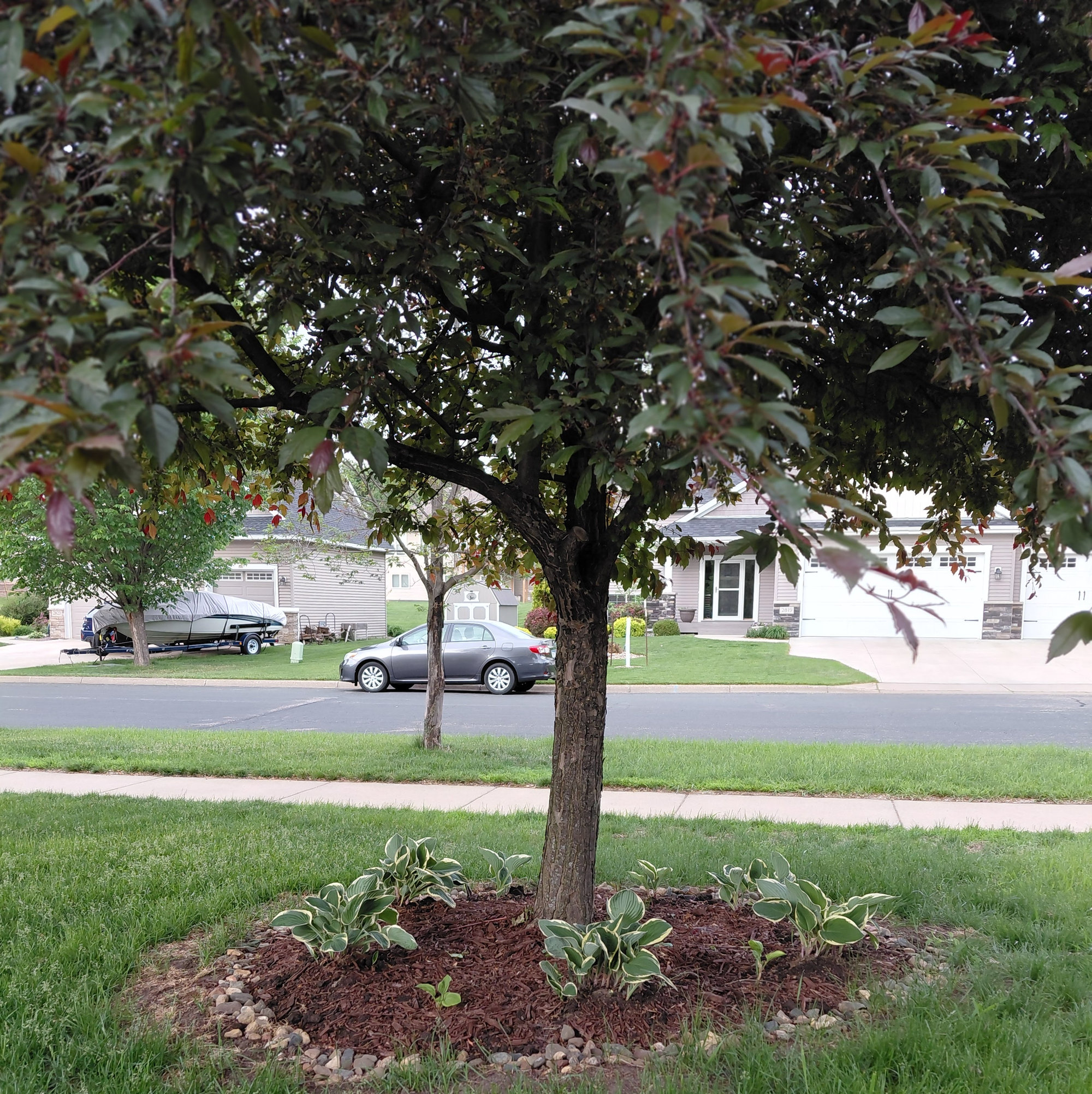
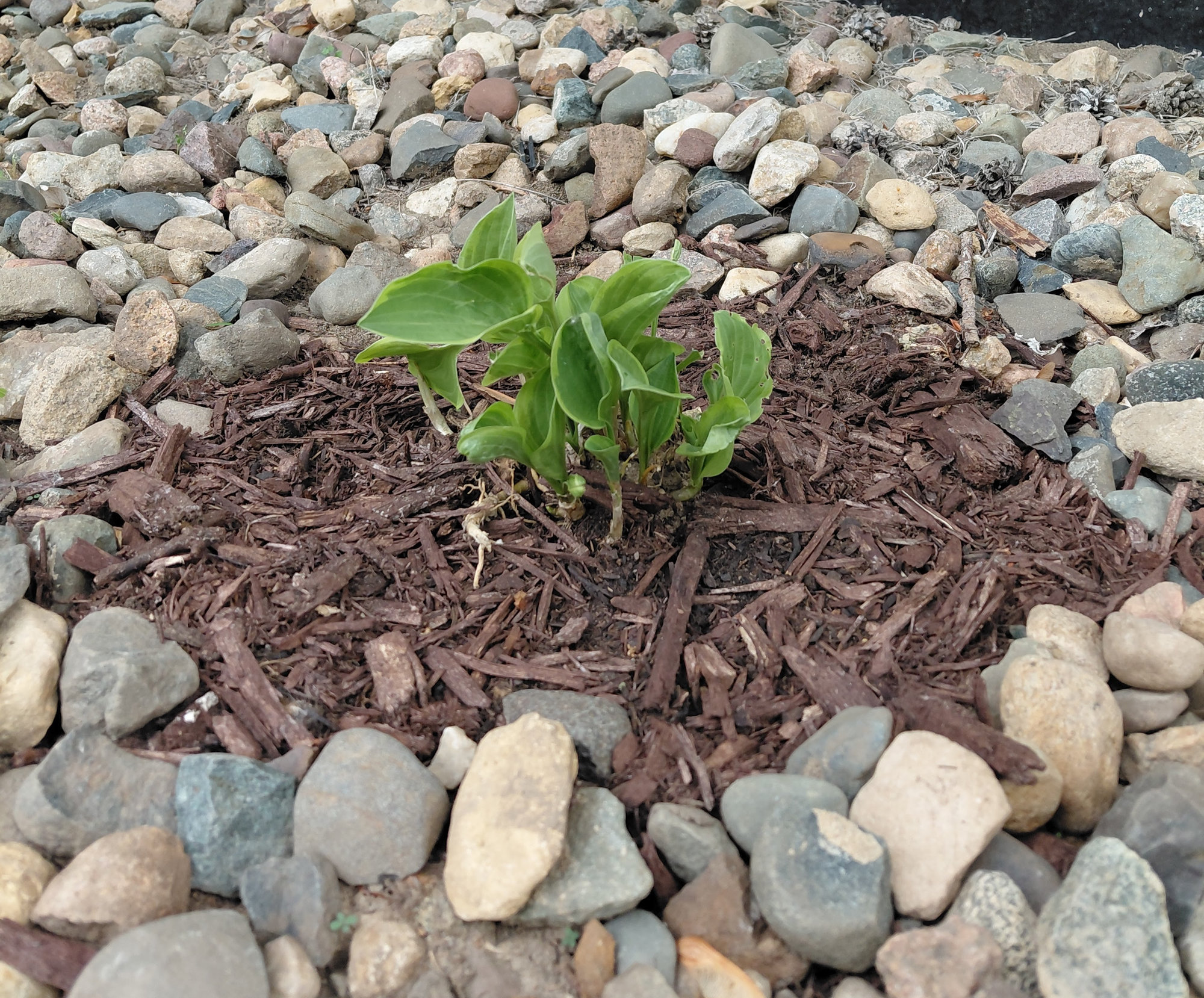
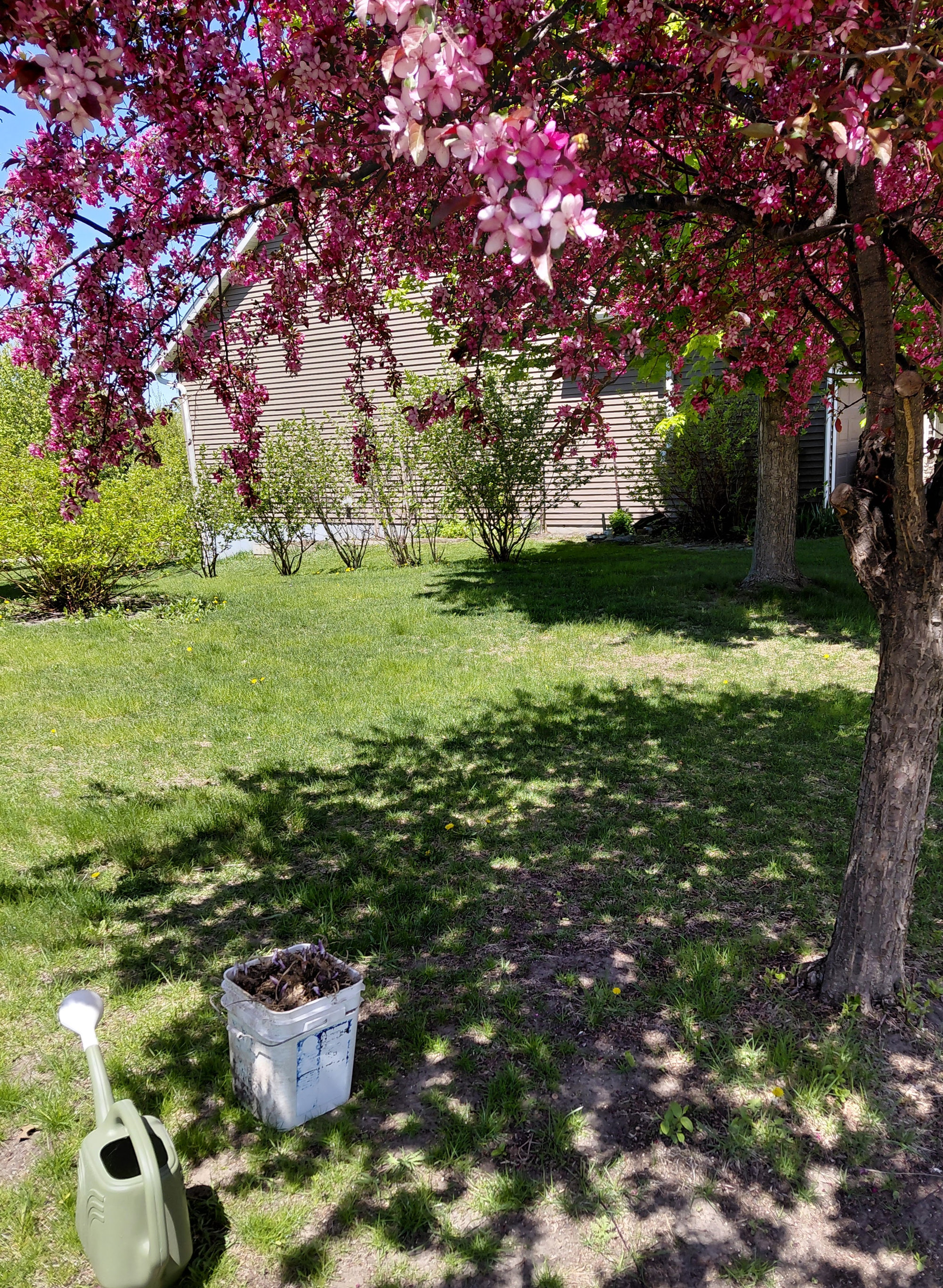
Three weeks in. They're just beginning to show. Everything that matters is still mostly underground. |
Dear Empowered Reader,
The hostas are beginning to show.
Three weeks in the ground and the bed still looks, to my neighbors, like a patch of mulch and the beginnings of a garden. But if you know what this garden started from, tightly coiled hostas you can see the color of new things, pushing up through the soil with a kind of unhurried certainty that I find, honestly, a little exciting. |
The garden and the planner. Both full. The question is whether full means flourishing.
|
I did not intervene. I did not overwater out of anxiety or poke at the soil to check the roots. I tended steadily and then I waited, and now here is the first evidence that the waiting was the right call.
And the yard, suddenly, feels like it is on the edge of something.
I have been sitting with that word this week, “full” because summer is almost here in Minnesota. Summer comes the way it always does, not gradually but all at once, and with it will come everything summer carries: the neighborhood gatherings and the grad parties, the long to-do lists that somehow feel more urgent in the light of longer days, the invitations, the obligations that feel like invitations, and the sense that the calendar, like the garden bed, has gotten very dense very fast.
I stood at my office window this past Friday looking out at those first tentative sprouts and then back at my planner, which was also full, and I asked myself a question I want to ask you today:
“Is this abundance? Or is this too much?”
Because those are not the same thing. And learning to tell the difference may be the most important skill summer asks of us.
---
There is a concept in cognitive psychology called “decision fatigue”, the well-documented finding that the quality of our decisions deteriorates the more choices we make in a given period, regardless of how significant those choices are.
Roy Baumeister's foundational research on ego depletion, and the extensive subsequent work it sparked, showed something counterintuitive: the mental resources we use to decide, to self-regulate, to say yes or no, is not infinite. It depletes across a day the way a muscle tires across a workout. And when it is depleted, we do not make worse big decisions while our small decisions remain sharp. We make worse decisions *across the board.* We default. We acquiesce. We say yes when we mean maybe, and maybe when we mean no.
Psychologist Barry Schwartz, in his research on the paradox of choice, found a complementary pattern: the more options we hold open, the less satisfied we tend to be with the one we eventually choose. The fullness itself becomes the problem. Not because we have too little capacity, but because nothing in our modern environment is designed to tell us when we have enough.
Summer, culturally, is the season that tells us to add. Add activities. Add gatherings. Add experiences. Squeeze the juice from every long day. And for some people, some summers, that is exactly right.
But for many of us, the adding has already happened before we chose it. The calendar fills from the outside in. And we arrive at June somehow more tired than we were in April, unable to name exactly what happened. |
Divided from plants that have been growing in our family for over two decades. You can't tell from the outside when something is holding more than its center can sustain. |
I want to offer you a distinction I have found useful, one I first started sharing in my work with coaching clients who could not understand why they felt so drained when their lives, by any external measure, looked so full and good.
There is a kind of fullness that energizes. You know it because after the dinner party, the hike, the deep conversation, the afternoon of creative work, you feel more like yourself, not less. The activity added something to you. You drew on your resources, yes, but you also replenished them. This is what I call “richness”. It is the fullness of a garden just coming into season, the first green things pushing up, unhurried, doing exactly what they were built to do.
And then there is a kind of fullness that depletes, that wears the costume of productivity and engagement but leaves you exhausted by Friday. The meeting that could have been an email. The obligation that carries a relationship tax you didn't consciously agree to. The project you said yes to because the window was open and you had not yet learned to check the weather. This is overwhelm masking as productivity. And it is very good at its disguise.
The research of organizational psychologist Christina Maslach, whose work on burnout transformed how we understand workplace depletion, identifies a key early marker of burnout that often goes unrecognized: *the loss of the ability to feel satisfaction from things that used to bring it.* Not exhaustion first. Numbness first. The work is still happening. The calendar is still full. But something has gone quiet inside that used to thrive.
If anything in that description is familiar, I want to say gently: that is information. Not failure. Not weakness. Information from a wise system doing its job.
--- When I divided the hostas, I didn't just split the plants. I looked at each one carefully. Some were clearly ready to be divided, their root mass had grown so large that the center of the plant was starting to die back, the classic sign that the plant is holding more than it can sustain. Others needed more time. And a few were right at the edge: they “could” be divided, but doing so would cost them a full season of growth.
You cannot look at a plant's outside and know that. You have to know what to look for. You have to be willing to pause and assess.
|
I drove north with an empty trunk and came home with it full, not of obligation, but of roots that had been growing in my family for over twenty years. That is the shape of receiving when we do it well. |
Those first small sprouts I am watching now, they are not trying to be the finished plant yet. They are doing the next right thing. Sending up just enough to catch the light. Trusting that the roots they have been building underground will support what comes next.
I think about that often as I look at my own life mid-season.
The question is not simply: am I busy? The question is: am I holding more than my center can sustain? And if I am, am I willing to let something be divided, shared, delegated, released, deferred, rather than waiting for the die-back to do it for me? A die-back refers to the gradual death of plant parts, typically starting from the tips or ends of branches. As a novice gardener this term was introduced to me by a neighbor. And it has been helpful in thinking about surviving versus thriving.
There is a point I want to highlight here that I do not think gets enough attention in conversations about boundaries and well-being.
We talk a great deal about saying no. About protecting capacity. About the courage of the edit. All of that is real and worth practicing.
But there is a practice that is in some ways harder underneath it: learning to receive.
Not just receiving rest (though that too). But receiving help. Receiving the offer to share the weight. Receiving the acknowledgment that you are carrying something real and that you do not have to carry it alone.
Research on social support and resilience consistently finds that the ability to accept support, not just give it, is one of the strongest predictors of sustained well-being under stress. And yet, for many of us, especially those of us who identify with being capable, reliable, the one who holds things together, receiving feels uncomfortable in a way that's hard to articulate. We have organized our self-concept around giving. Receiving feels, somehow, like we are failing.
Psychologist and researcher Brené Brown has written extensively about how the inability to receive, to let others see our need, to accept generosity without immediately equalizing the ledger, is connected to the same shame architecture that drives perfectionism and over-giving. It is not a coincidence that the people who most struggle to say no are often the same people who most struggle to say, "thank you, yes, I'll take that.". |
The hostas my parents gave me were, among other things, an act of receiving I had to consciously choose. I could have politely declined. I could have said I wasn't ready, didn't know enough yet, would figure out my own. Instead I drove north with an empty trunk and came home with it full, not of obligation, but of inheritance, of shared roots, of something that had been growing in my family for over twenty years.
That, I think, is the shape of receiving when we do it well. We let something enter. We make room. We trust that what we are given is not more than we can tend.
And now, three weeks later, the first sprouts are proving that trust right.
AFFIRMATION
"I am allowed to name the difference between what fills me and what drains me. I do not have to earn the right to an empty afternoon or an unscheduled morning. Fullness that nourishes is a gift. Fullness that depletes is a signal. I am learning to tell the difference, and to act on what I know."
PRACTICES FOR THIS SEASON
Audit one week. At the end of this week, look back at everything you said yes to. For each item, ask: did this add to me, or draw from me? You are not looking for a balance sheet. You are looking for patterns, the categories of obligation that reliably cost more than they return.
Name the disguise. Identify one thing on your current list that *feels* like productivity but is actually overwhelm in costume. It is often the thing you dread slightly even though it's "fine," the thing that somehow takes twice the energy you expected, the thing you would quietly be relieved to have cancelled. You do not have to drop it. Just name it honestly.
Practice a small receive. This week, when someone offers help, to carry something, cover something, take something off your list, say yes before you calculate whether you deserve it. Just: yes, thank you. Notice what that feels like in your body. That noticing is the practice.
Locate your replenishers. Make a short, specific list of three to five things that reliably leave you feeling more like yourself afterward. Not things you think “should” replenish you. Things that actually do. Guard at least one of these with the same protention that you give your most important commitments. Because it is.
Build in the long lens. As we discussed last issue, monthly reflection reveals what daily living obscures. As you enter summer, set a single calendar reminder for late June and July. The question: “What has this season actually given me, and what has it asked of me? Am I holding more than my center can sustain?”
---
REFLECTION QUESTIONS For your journal, your walk, your quiet morning
Think of a recent stretch of time that felt full in a depleting way. What were the signals your body sent you that you may have overridden or rationalized? What would it have cost you, really, to honor one of those signals?
Where in your life are you holding something that could be shared, but you haven't offered it out because asking for help feels like it means something about you? What does it mean, in your current story?
What is one thing this summer that genuinely replenishes you, that belongs on the calendar the way an obligation belongs on the calendar? What would it take to protect that time?
The sprouts are small. Unhurried. Doing the next right thing without any apparent concern for how far they still have to go.
I am trying to take their lead. Roots first. Then reach.
More in two weeks.
Take care, dear reader,
Julie
|
Unhurried by Sara Etgen-Baker |
|
|
|